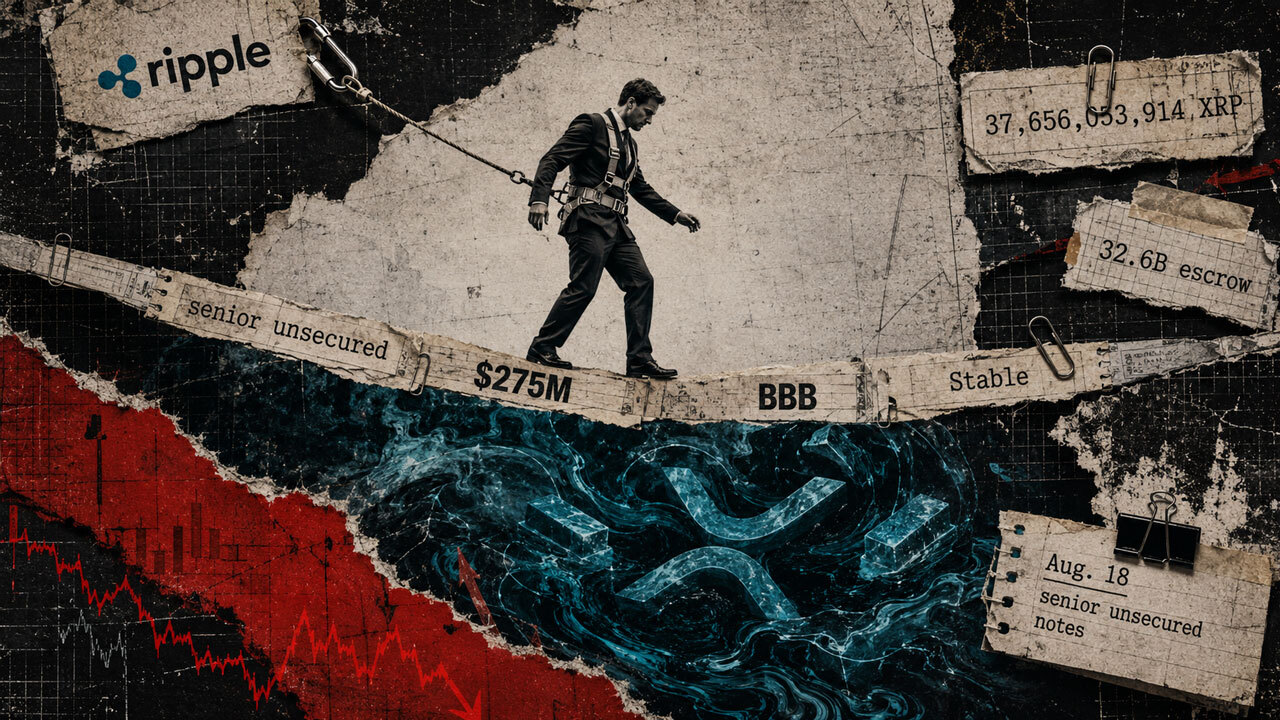
KBRA의 BBB 등급은 리플 Prime에 투자 등급 액세스를 제공하지만 예상되는 부모 지원과 대부분 에스크로된 XRP는 신용 케이스의 핵심으로 남아 있습니다.
리플 Prime은 2억 7, 500만 달러 규모의 선순위 무담보 채권 사모 배치를 마감하여 비은행 프라임 브로커에게 미국 확장을 위한 새로운 자본 풀을 제공했습니다. KBRA의 투자 등급 평가는 학부모 지원 메커니즘을 핵심 신용 문제로 만듭니다.
KBRA의 BBB 평가는 규제된 운영 회사에서 돈이 자유롭게 이동할 수 없는 경우 최종 모회사인 Ripple이 중개업을 지원할 것이라는 기관의 기대에 부분적으로 달려 있습니다. 이는 이 메모를 Ripple의 기관 금융 확장이 자금을 지원하는 XRP에 민감한 대차대조표와 얼마나 멀리 분리되었는지에 대한 테스트가 됩니다.
리플은 해당 제안이 8월 18일에 마감되었으며 수익금은 규제 대상 기업 내에서 운전 자본 및 일반 기업 목적을 지원할 것이라고 말했습니다. Piper Sandler는 리드 배치 대리인으로 활동했습니다. Ripple의 공개 발표는 수익금의 금액, 순위 및 사용을 제공하지만 상위 보증 또는 XRP 서약에 대한 조건은 제공하지 않습니다.
KBRA는 예상되는 부모 지원을 설명하는 반면 Ripple은 보안되지 않은 노인 메모를 설명합니다. 검토된 공식 공개 소스는 XRP를 담보로 식별하지 않으며 리플 Labs가 집행 가능한 보증에 서명했는지 여부 또는 보증 내용을 공개하지 않습니다.
법적 구조는 차용인, 규제 대상 중개인 및 KBRA가 지원을 기대하는 모회사를 분리합니다.
KBRA는 리플 Prime CIV US BD Hold Co LLC를 선순위 무담보 부채를 평가한 중간 지주 회사로 식별합니다. 리플 Prime의 규제 공개에 따르면 그 아래에는 미국 운영 회사이자 SEC 등록 브로커-딜러 및 CFTC 등록 선물 커미션 상인인 Hidden Road Partners CIV US LLC가 있습니다.
결과 체인에는 세 가지 별개의 레이어가 있습니다. 리플 Labs는 최종 모회사이고 리플 Prime 이름은 인수된 프라임 중개 플랫폼을 포함하며 규제 대상 미국 브로커는 등급 지주 회사 아래에 위치합니다. 신용은 각 기업이 이용할 수 있는 법률 및 규제 채널을 통해서만 해당 구조를 통해 이동할 수 있습니다.
각 계층은 서로 다른 역할을 수행합니다. 기업 자원은 모기업에, 부채는 지주 회사에, 고객 관련 규제 의무는 브로커에 있습니다.
KBRA는 공모가 마감되기 전인 7월 지주회사의 선순위 무담보 채권에 안정적 전망을 갖춘 BBB 등급을 부여했습니다. 해당 기관은 선순위 무담보 채권자의 회복 전망이 해당 등급과 대체로 일치한다고 판단했기 때문에 지주 회사의 발행자 등급에 등급을 적용하지 않았습니다. KBRA는 지난 4월 지주회사와 운영회사 모두에 BBB 발행자 등급을 부여했다.
그러한 정렬은 법적 별거를 삭제하지 않습니다. 규제 또는 유동성 제약으로 인해 운영 회사의 배당이 제한되는 경우 KBRA는 리플 Prime의 전략적 중요성과 모회사가 이미 투자한 금액으로 인해 Ripple이 재정적 지원을 제공할 가능성이 높다고 말했습니다. 기관은 두 등급 모두에서 Ripple의 재정적 지원을 주요 고려 사항으로 간주했습니다.
즉, 신용 사례에서는 현금이 아래에서 위로 올라갈 수 없을 때 규제 대상 중개 회사 위에서 지원이 올 수 있다고 가정합니다. 공개 자료는 가정이 기여하는 등급 등급의 수를 정량화하지 않으므로 리플 Prime의 독립형 차입 능력은 모기업 지원 관점과 완전히 분리될 수 없습니다.
원문 제목: Ripple relies on locked XRP reserves to back a $275 million institutional credit line
KBRA’s BBB rating gives Ripple Prime investment-grade access, but expected parent support and mostly escrowed XRP remain central to the credit case.
Ripple Prime closed an upsized $275 million private placement of senior unsecured notes, giving the non-bank prime broker a new pool of capital for its U.S. expansion. KBRA’s investment-grade assessment makes the parent-support mechanism the central credit issue.
KBRA’s BBB assessmentdepends partly on the agency’s expectation that ultimate parent Ripple would support the brokerage if money could not move freely from the regulated operating company. That makes the notes a test of how far Ripple’s institutional-finance buildout has separated from the XRP-sensitive balance sheet that helped fund it.
Ripple said the offering closed on Aug. 18and that proceeds would support working capital and general corporate purposes within a regulated entity. Piper Sandler acted as lead placement agent. Ripple’s public announcement gives the amount, ranking and use of proceeds, but no terms for a parent guarantee or XRP pledge.
KBRA describes expected parental support, while Ripple describes senior unsecured notes. The official public sources reviewed do not identify XRP as collateral and do not disclose whether Ripple Labs signed an enforceable guarantee or what any guarantee would cover.
The legal structure separates the borrower, the regulated broker and the parent whose support KBRA expects.
KBRA identifies Ripple Prime CIV US BD HoldCo LLC as the intermediate holding company whose senior unsecured debt it rated. Beneath it sits Hidden Road Partners CIV US LLC, the U.S. operating company and an SEC-registered broker-dealer and CFTC-registered futures commission merchant, according toRipple Prime’s regulatory disclosures.
The resulting chain has three distinct layers: Ripple Labs is the ultimate parent, the Ripple Prime name covers the acquired prime-brokerage platform, and the regulated U.S. broker sits below the rated holding company. Credit can move across that structure only through the legal and regulatory channels available to each entity.
Each layer carries a different role: corporate resources sit with the parent, debt at the holding company, and customer-facing regulatory obligations at the broker.
KBRA assigned the holding company’s senior unsecured debt a BBB rating with a Stable Outlook in July, before the offering closed. The agency applied no notching from the holding company’s issuer rating because it viewed recovery prospects for senior unsecured creditors as broadly consistent with that rating. KBRA had assigned BBB issuer ratings to both the holding company and operating company in April.
That alignment does not erase the legal separation. If regulatory or liquidity constraints restricted dividends from the operating company, KBRA said Ripple would likely provide financial support because of Ripple Prime’s strategic importance and the amount the parent had already invested. The agency called Ripple’s financial backing a key consideration in both ratings.
In other words, the credit case assumes support can come from above the regulated brokerage when cash cannot move up from below. Public materials do not quantify how many rating notches that assumption contributes, so Ripple Prime’s standalone borrowing capacity cannot be cleanly separated from the parent-support view.