Bitquery는 793개의 발신자 계정이 93개를 생성한 것으로 나타났습니다. 더 넓은 계정 참여가 여전히 적기 때문에 8월 전체 거래의 2%가 발생했습니다.
XRP 원장(XRPL)은 50억 건의 거래를 넘겼으며, 새로운 데이터는 활동이 소규모 계정 그룹에 점점 더 집중되어 있음을 보여줍니다.
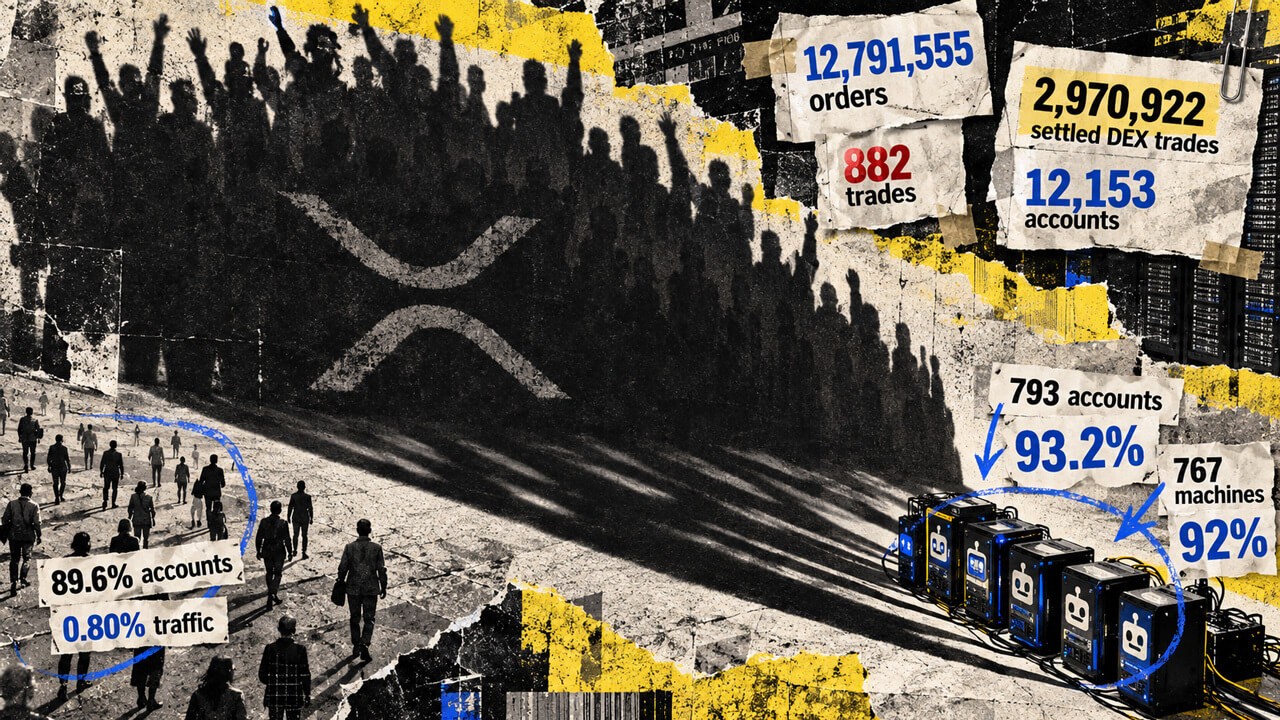
Bitquery는 793개의 발신자 계정이 8월에 XRPL의 8, 156만 건의 거래 중 7, 598만 건, 즉 월간 활동의 93. 2%를 생성한 것으로 나타났습니다. 회사는 해당 계정 중 767개를 기계로 분류하여 전체 거래의 92%를 담당했으며, 26개의 거래소 핫 지갑이 1. 1%를 추가로 기여했습니다.
집중은 거래 수를 넘어 확장됩니다. Evernorth Research에서는 거래를 시작하는 계정 수가 약 40% 감소했음에도 불구하고 2분기에 XRPL 주문장 거래량이 전년 동기 대비 79% 증가한 것으로 나타났습니다.
데이터 세트는 더 적은 수의 참가자를 통해 더 많은 활동을 처리하는 네트워크를 가리키지만 Evernorth는 이러한 변화의 일부가 전문 거래자가 더 많은 흐름을 차지하는 것을 반영할 수 있다고 말했습니다.
이러한 구별은 XRPL의 50억 6천만 건의 검증된 거래 이정표의 중요성을 복잡하게 만듭니다. 원장은 막대한 처리량을 처리하고 있으며, 해당 트래픽의 경제적 가치는 자동화된 활동이 의미 있는 XRP 잔고가 필요한 거래, 결제 및 유동성에 정착하는지 여부에 따라 점점 더 달라집니다.
네트워크 활동과 경제적 실행 사이의 격차는 계정 수준에서 극명해집니다.
Bitquery는 8월에 1, 279만 건의 분산 교환 주문을 포함하여 거의 1, 300만 건의 거래를 생성한 주소를 확인했습니다. 그 중 882건의 주문만이 거래로 이어졌습니다. 이 계정만으로도 해당 달 동안 XRPL이 처리한 모든 것의 약 6분의 1이 생산되었습니다.
원장 전반에 걸쳐 Bitquery는 8월에 12, 153개 계정에서 XRPL 내장 거래소에서 297만 건의 결제 거래를 기록했습니다. 이는 해당 기간 동안 기록된 총 8, 100만 건 이상의 거래 중 일부에 불과합니다.
회사의 분석은 자동화가 더 넓은 전체를 어떻게 형성했는지 보여줍니다. DEX 주문 봇은 3, 925만 건의 거래 또는 8월 트래픽의 48. 1%를 생성했으며, 먼지 살포 계정은 1, 879만 건을 추가로 기여했습니다. NFT 관련 자동화, 스팸 확인 및 기타 기계 활동이 수백만 달러 이상을 차지했습니다.
대부분의 계정은 분배의 반대쪽에 위치했습니다. 8월 동안 활성화된 계정의 거의 절반이 단일 거래를 보냈고, 4/5는 5개 이하의 거래를 보냈습니다. 먼지 수준 이체를 제외한 Bitquery의 저주파 필터는 거래 계정의 89. 6%를 포착했지만 전체 원장 활동의 0. 8%에 불과했습니다.
숫자는 개별 사용자가 아닌 주소를 측정합니다. 단일 거래소 지갑은 수천 명의 고객을 대표할 수 있는 반면, 하나의 거래 회사는 여러 주소를 운영할 수 있으므로 계정 집중이 사용자 집중으로 직접 변환되는 방식을 제한합니다.
원문 제목: XRP Ledger crossed 5 billion transactions, but 92% of August activity came from just 767 bots
Bitquery found just 793 sender accounts produced 93.2% of all August transactions as broader account participation remained thin.
XRP Ledger (XRPL)crossed 5 billion transactions, with new data showing activity increasingly concentrated among a small group of accounts.
Bitquery found that 793 sender accounts generated 75.98 million of XRPL’s 81.56 million transactions in August, or 93.2% of the month’s activity. The firm classified 767 of those accounts as machines, responsible for 92% of all transactions, while 26 exchange hot wallets contributed another 1.1%.
The concentration extends beyond transaction counts. Evernorth Research found that XRPL order-book trading volume rose 79% from a year earlier in the second quarter even as the number of accounts initiating those trades fell about 40%.
Together, the datasets point to a network processing more activity through fewer participants, thoughEvernorthsaid part of that shift could reflect professional traders taking a larger share of flow.
That distinction complicates the significance of XRPL’s 5.06 billion validated-transaction milestone. The ledger is handling enormous throughput, while the economic value behind that traffic increasingly depends on whether automated activity settles into trades, payments, and liquidity that require meaningfulXRP balances.
The gap between network activity and economic execution becomes stark at the account level.
Bitqueryidentifiedone address that generated almost 13 million transactions in August, including 12.79 million decentralized-exchange orders. Only 882 of those orders resulted in trades. The account alone produced roughly one-sixth of everything XRPL processed during the month.
Across the ledger, Bitquery counted 2.97 million settled trades onXRPL’s built-in exchangefrom 12,153 accounts in August. That was a fraction of the more than 81 million total transactions recorded during the period.
The firm’s breakdown shows how automation shaped the wider total. DEX order bots generated 39.25 million transactions, or 48.1% of August traffic, while dust-spraying accounts contributed another 18.79 million. NFT-related automation, check spam, and other machine activity accounted for millions more.
Most accounts sat at the opposite end of the distribution. Nearly half of the accounts active during August sent a single transaction, while four-fifths sent five or fewer. Bitquery’s lower-frequency filter, which excluded dust-level transfers, captured 89.6% of transacting accounts but only 0.8% of total ledger activity.
The numbers measure addresses rather than individual users. A single exchange wallet can represent thousands of customers, while one trading firm can operate multiple addresses, limiting how directly account concentration translates into user concentration.