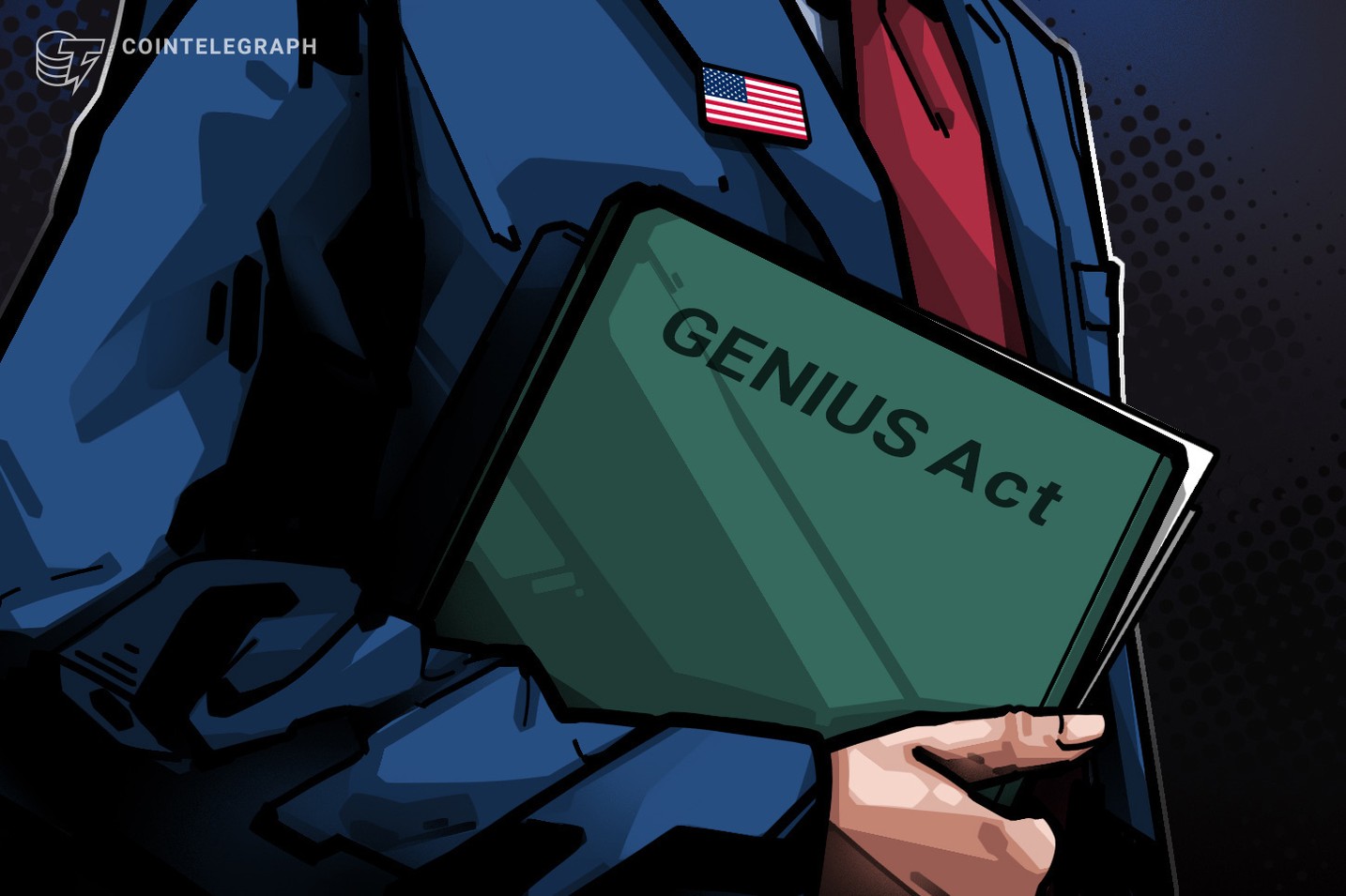
GENIUS 법은 보다 안전하고 완전히 확보된 달러 스테이블코인과 보다 빠른 지불을 약속하지만 발행자를 국채와 현금으로 유도함으로써 미국 부채에 대한 새로운 수요 엔진을 고정시킬 수도 있습니다.
7월 18일에 발효된 미국 스테이블코인을 위한 국가 혁신 안내 및 확립(GENIUS)법은 달러 고정 토큰을 규제 회색 지대에서 감독되는 결제 우선 프레임워크로 최종적으로 끌어내는 법령으로 청구됩니다.
지지자들은 이것이 법적 명확성, 소비자 보호 및 프로그래밍 가능한 돈의 길을 제공한다고 말합니다. 비평가들은 이것이 더 깊은 질문을 제기한다고 말합니다.
발행인이 현금과 단기 국채를 보유하는 데 전념하고 있다면 미국 채권의 구조적 구매자가 될까요? 저자이자 이데올로기인 Shanaka Anslem Perera는 GENIUS에서 "발행된 모든 디지털 달러는 미국 국채를 합법적으로 구매하는 것이 됩니다"라고 쓴 사례입니다.
GENIUS 법은 "결제 스테이블코인"을 주로 결제 및 결제에 사용되는 법정화폐 참조 토큰으로 정의합니다. 허용된 결제 스테이블 코인 발행자만이 미국 사용자에게 대규모로 서비스를 제공할 수 있으며, 이러한 발행자는 고품질 자산의 좁은 풀을 사용하여 1: 1 비율로 토큰을 지원해야 합니다.
이러한 자산에는 미국 동전 및 통화, 연방 준비 은행 잔액, 보장된 은행 예금, 단기 국채, 적격 정부 머니 마켓 펀드 및 재무부가 담보하는 엄격하게 제한된 익일 레포가 포함되며 모두 분리된 계좌에 보관됩니다.
발행자는 광범위한 대출이나 거래보다는 스테이블코인 발행 및 상환과 관련된 제한된 활동을 고수하면서 액면가로 상환하고, 정기적인 준비금 공시를 게시하고, 규모 기준 이상의 감사된 재무 정보를 제공해야 합니다.
국내 플랫폼을 통해 미국 고객에게 접근하려는 외국 발행인은 이 프레임워크를 준수하거나 본국의 체제가 "비교 가능"합니다는 것을 재무부에 입증해야 합니다.
관련 항목: 새로운 미국 암호화폐 법안이 최종적으로 상품과 증권을 정의하는 방법.
그러나 GENIUS는 오프닝 공연을 준비하기보다는 준비 단계에 더 가까울 수 있습니다. Brookings의 분석가들은 최근 규제 당국이 이 법안을 시행할 때 발생할 수 있는 몇 가지 잠재적인 문제에 대해 논의했습니다.
비보험 은행 예금, 대규모 비금융 상장 기업이 스테이블 코인 발행에서 수행할 수 있는 역할, "비교할 수 있는" 외국 규제가 미국 표준에서 벗어날 수 있는 방법, 발행인이 실제로 AML/CFT 제재 및 모니터링 의무를 충족할 수 있는 기술 및 절차적 역량을 보유하고 있는지를 중심으로 한 경고입니다.
Perera의 "법의학 분석"은 몇 단계 더 나아갑니다. 그는 GENIUS가 지불 스테이블 코인 발행자를 디지털 달러에 대한 글로벌 수요를 단기 미국 국채에 대한 구조적 수요로 바꾸는 것이 주요 경제적 역할을 하는 좁은 은행으로 전환하는 것이라고 해석합니다. 그는 다음과 같이 주장한다.
“미국 재무부는 연준을 우회하고 민간 부문을 정부 부채의 강제 구매자로 징집하여 적자 자금조달이라는 불치병 문제를 일시적으로 해결하는 미국 통화 구조의 구조적 변화를 실행했습니다. ”
준비금이 중앙 은행 잔고, 단기 국채, 정부 단기 담보 대출 및 고정 단기 담보 대출로 밀려나고 발행자가 광범위하게 대출하거나 자유롭게 재담보하거나 사용자에게 수익률을 지불할 수 없기 때문에 자연스러운 결과는 T-bills로 가득 찬 대차대조표입니다. .
그런 의미에서 Circle, Tether 및 GENIUS 호환 동료는 파이프라인이 됩니다. 인플레이션이나 자본 통제를 피해 신흥 시장의 저축자들은 디지털 달러를 구매하고 있습니다. 발행자는 이러한 유입을 단기 미국 채권에 보관합니다. 재무부는 더 저렴한 자금을 누리고 있습니다. 헹구고 반복하십시오.
관련 항목: Tether CEO는 USDt FUD를 퍼뜨리는 S&P 평가 기관과 영향력 있는 사람들을 비난했습니다.
청구서에 대한 꾸준한 입찰을 생성하는 동일한 디자인은 Perera가 "상환 비대칭"이라고 부르는 현상도 생성합니다. 중앙은행 디지털 통화(CBDC)에 대한 연준의 현재 입장은 분명하지만(즉, 의회 승인 없이는 이를 추구하지 않음) Perera는 Cointelegraph에 "그것은 평시 정책입니다"라고 말했습니다.
그는 스테이블코인 유출이 유입보다 국채 수익률을 2~3배 더 높이는 것으로 나타난 국제 결제 은행(Bank for International Settlements) 연구를 지적했습니다. 1조 달러 규모의 테이블 코인 시장이 40% 하락할 경우, 수천억 개의 단기 국채가 몇 주 안에 시장에 투매될 수 있습니다. 그는 다음과 같이 경고한다.
그 시점에서 연준의 "의회 없이는 디지털 달러가 없다"는 입장은 금융 안정성 명령과 직결될 것입니다. 툴킷은 이미 마련되어 있습니다. GENIUS 시대의 충격을 안정시키기 위해 이를 사용한다면 민간 스테이블코인이 이제 사실상 중앙은행의 방어막 위에 있다는 사실이 강조될 것입니다.
서류상으로 GENIUS는 명확한 연방 표준에 따라 완전히 예약된 달러 토큰, 더 빠르고 저렴한 결제, 달러 시스템의 핵심에 온체인 결제를 연결하는 방법 등 약속을 이행할 수 있습니다.
Scott Bessent 재무장관의 야망이 실현된다면 해당 시장은 수조 달러에 도달하여 재무부 수요의 지속적인 원천이 될 수 있습니다. 그러나 이는 또한 미국의 재정 전략, 디지털 달러에 대한 글로벌 수요, 중앙은행 자금의 다음 장이 이제 얽혀 있다는 것을 의미하기도 합니다.
GENIUS는 스테이블코인을 활용하는 현명한 방법이 될 수도 있고, 위기에 따른 디지털 달러로 끝나는 게임의 주사위 굴림과 돈 파이프라인을 실제로 통제하는 사람에 대한 훨씬 더 명확한 논쟁이 될 수도 있습니다.
매거진: GENIUS Act가 가까워지면서 비트코인과 스테이블코인의 대결이 다가오고 있습니다.
원문 제목: Does GENIUS turn stablecoin issuers into stealth buyers of US debt?
The GENIUS Act promises safer, fully reserved dollar stablecoins and faster payments, but by steering issuers toward T-bills and cash, it may also hardwire a new demand engine for US debt.
The Guiding and Establishing National Innovation for US Stablecoins (GENIUS) Act, signed into law on July 18, is billed as the statute that finally drags dollar‑pegged tokens out of the regulatory gray zone into a supervised, payments‑first framework.
Supporters say it offers legal clarity, consumer protections and a path for programmable money.
Critics say it raises a deeper question:.
If issuers are tightly steered into holding cash and short‑term Treasurys, does that make them structural buyers of US debt? That’s the case laid out by author and ideologist Shanaka Anslem Perera, whowritesthat under GENIUS, “Every digital dollar minted becomes a legislated purchase of US sovereign debt.
”.
The GENIUS Act defines “payment stablecoins” as fiat‑referenced tokens used mainly for payments and settlement.
Only permitted payment stablecoin issuers can serve US users at scale, and these issuers must back their tokens at a 1:1 ratio with a narrow pool of high-quality assets.
These assets include US coins and currency, Federal Reserve balances, insured bank deposits, short‑maturity Treasurys, qualifying government money market funds and tightly constrained overnight repos backed by Treasurys, all held in segregated accounts.
Issuers have to redeem at par, publish regular reserve disclosures, and provide audited financials above size thresholds, while sticking to a limited set of activities linked to issuing and redeeming stablecoins rather than broader lending or trading.
Foreign issuers seeking access to US customers via domestic platforms must either comply with this framework or demonstrate to the Treasury that their home country’s regime is “comparable.
”.
Related:How the new US crypto bill could finally define commodities and securities.
Yet GENIUS may be more of a warm-up than ready for the opening act.
Analysts at Brookings recentlydiscussedsome potential issues for regulators as they implement the act.
The caveats centered on uninsured bank deposits, the role that large non‑financial, publicly listed firms may play in issuing stablecoins, how “comparable” foreign regulation may deviate from US standards and issuers’ actually having the technological and procedural capacity to meet AML/CFT sanctions and monitoring obligations.
Perera’s “forensic analysis” goes several steps further.
He reads GENIUS as turning payment stablecoin issuers into narrow banks whose main economic role is to turn global demand for digital dollars into structural demand for short‑term US sovereign debt.
He argues:.
“The United States Treasury has executed a structural transformation of American monetary architecture that bypasses the Federal Reserve, conscripts the private sector as a forced buyer of government debt, and may have solved — temporarily — the terminal problem of deficit financing.
”.
Because reserves are pushed into central bank balances, short-dated Treasurys, government money market funds and fixed short-term secured loans, and because issuers cannot lend broadly, rehypothecate freely, or pay yields to users, the natural outcome is balance sheets packed with T-bills.
.
In that sense, Circle,Tetherand their GENIUS‑compliant peers become pipelines.
Emerging-market savers fleeing inflation or capital controls are buying digital dollars.
Issuers park those inflows in short‑term US paper.
The Treasury enjoys cheaper funding.
Rinse and repeat.
Related:Tether CEO slams S&P ratings agency and influencers spreading USDt FUD.
The same design that creates a steady bid for bills also creates what Perera calls “redemption asymmetry” on the way down.
While the Federal Reserve’s current position on central bank digital currencies (CBDCs) is clear (i.
e.
, not pursuing one without Congressional authorization), Perera told Cointelegraph, “that’s a peacetime policy.
”.
He points to Bank for International Settlements research that found stablecoin outflows raise Treasury yields two to three times more than inflows lower them.
Should a trillion-dollarstablecoinmarket suffer a 40% drawdown, hundreds of billions of short‑dated Treasurys could be dumped into the market in weeks.
He warns:.
At that point, the Fed’s “no digital dollar without Congress” stance would run straight into its financial‑stability mandate.
The toolkit is already in place; using it to stabilize a GENIUS‑era shock would underline that private stablecoins now sit on top of a de facto central bank backstop.
On paper, GENIUS can still deliver its promise: fully reserved dollar tokens under clear federal standards, faster and cheaper payments and a way to plug on‑chain settlement into the core of the dollar system.
If Treasury Secretary Scott Bessent’s ambitions play out, that market could reach toward the trillions and become a lasting source of Treasury demand.
But that also means US fiscal strategy, global demand for digital dollars and the next chapter of central bank money are now entangled.
GENIUS might prove to be a smart way to harness stablecoins, or the opening roll of the dice in a game that ends with a crisis‑driven digital dollar and a much more explicit debate over who really controls the money pipeline.
Magazine:Bitcoin vs stablecoins showdown looms as GENIUS Act nears.