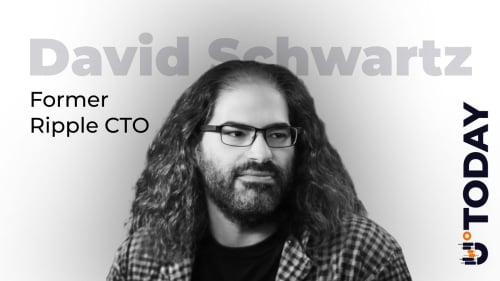
리플 CTO 명예 David Schwartz는 2024년 12월 17일부터 XRP Ledger에 대한 자신의 트윗 중 하나와 상호 작용했습니다.
트윗에서 Schwartz는 XRPL이 "aDEX"라고 밝혔습니다. 실제로 이는 2012년부터 모든 기능을 갖춘 세계 최초의 DEX입니다.
이에 대해 X 사용자는 AMM 기능이 XRP Ledger의 기본 기능인지 물었습니다. 이에 대해 리플 CTO 명예는 AMM이 원장 기능이라고 긍정적으로 대답했습니다. 그는 이를 통해 지갑과 같은 도구가 AMM 및 DEX와 상호 작용한 결과를 완전히 이해할 수 있다고 덧붙였습니다.
더 나아가 X 사용자는 이것이 왜 중요한지, 이 경로를 통과하는 본질이 무엇인지 물었습니다.
이에 대해 Schwartz는 두 가지 접근 방식 모두 장점과 단점이 있다고 말했습니다. 리플 명예 CTO에 따르면 이 접근 방식의 주요 장점 중 하나는 사용자가 악의적이거나 버그가 있을 수 있는 스마트 계약과 상호 작용할 위험이 없으며 AMM에는 유동성 공급자에게 "과세"하는 중개인인 "소유자"가 없다는 것입니다.
두 접근 방식 모두 장점과 단점이 있습니다. 이 접근 방식의 주요 장점은 사용자가 악의적이거나 버그가 있을 수 있는 스마트 계약과 상호 작용할 위험이 없으며 AMM에는 유동성 공급자에게 "세금을 부과"하는 중개인인 "소유자"가 없다는 것입니다.
Schwartz는 적어도 현재 구현에서 가장 큰 단점이 될 수 있는 점을 강조했습니다. 즉, 변동성 수확에 크게 최적화되어 있으며 두 개의 스테이블 코인 사이와 같이 수확할 변동성이 거의 없는 경우에는 성능이 좋지 않을 수 있다는 것입니다.
AMM(자동 시장 조성자)은 XRP Ledger의 분산형 거래소(DEX)에 유동성을 제공하며, 각 AMM은 두 개의 자산 풀을 보유합니다. 이들 중 하나는 XRP일 수 있고 둘 중 하나 또는 둘 다 토큰일 수 있습니다(XRP를 제외한 XRPL의 다른 모든 자산, 스테이블 코인은 XRP Ledger의 토큰에 대한 일반적인 모델입니다).
사용자는 수학 공식에 의해 설정된 환율로 두 자산을 교환할 수 있습니다.
AMM은 중앙지정오더북(CLOB) 기반 DEX와 통합되어 유동성을 강화합니다. 제안과 결제는 유동성 풀 내에서, 주문서를 통해, 또는 둘 다를 통해 교환하는 것이 가장 좋은 비율을 제공하고 그에 따라 실행되는지 여부를 결정하기 위해 자동으로 최적화됩니다.
원문 제목: 'No Owners, No Tax': Ripple CTO Emeritus Explains XRPL's AMM DEX Design
Ripple CTO EmeritusDavid Schwartzinteracted with one of his tweets on the XRP Ledger dating back to Dec.
17, 2024.
In the tweet, Schwartz stated that the XRPL "is" aDEX; in fact, it is the world's first DEX, fully functional since 2012.
Reacting to this, an X user asked if the AMM feature was native to theXRP Ledger; to this, the Ripple CTO emeritus answered in the affirmative, saying that the AMM is a ledger feature.
He added that this guarantees that tools like wallets can understand fully the consequences of interacting with the AMM and DEX.
Prodding further, the X user asked why this was important and the essence of going through this route.
Answering this,Schwartzstated that there are advantages and disadvantages to both approaches.
One of the main advantages of this approach, according to theRipple CTO emeritus, is that users do not have to risk interacting with smart contracts that may be malicious or buggy, and AMMs do not have "owners" as middlemen who "tax" the liquidity providers.
There are advantages and disadvantages to both approaches.
The main advantages to this approach is that the user doesn't have to risk interacting with smart contracts that may be malicious or buggy and AMMs don't have "owners" as middlemen who "tax" the liquidity providers.
Schwartz highlighted what might be the biggest disadvantage, at least in the current implementation — that it is heavily optimized for volatility harvesting and might not perform as well in cases where there is little volatility to harvest, such as between two stablecoins.
Automated Market Makers (AMMs) provide liquidity to theXRP Ledger's decentralized exchange (DEX), with each AMM holding a pool of two assets.
One of these can be XRP, and one or both of them can be tokens (any other asset on theXRPLexcept XRP; stablecoins are a common model for tokens on XRP Ledger).
Users can swap between the two assets at an exchange rate set by a mathematical formula.
AMMs are integrated with the central limit order book (CLOB)-based DEX to enhance liquidity.
Offers and payments are automatically optimized to decide whether swapping within a liquidity pool, through the order books, or both, provides the best rate and executes accordingly.