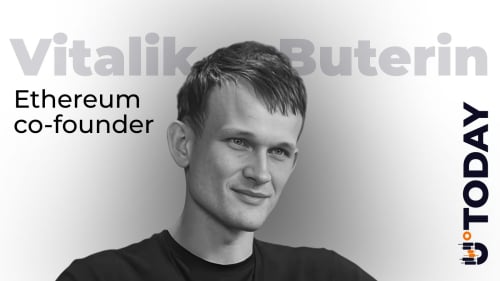
이더리움 공동 창립자인 Vitalik Buterin은 개발자와 사용자가 블록체인 보안에 대해 어떻게 생각해야 하는지를 재정의하고 싶어합니다.
캐나다의 신동은 "보안"과 "사용자 경험"(UX) 사이의 전통적인 경계가 대체로 환상에 불과합니다고 주장했습니다.
부테린은 X 소셜미디어 네트워크에 "사용자의 의도와 시스템의 실제 동작 사이의 차이를 최소화하는 것이 목표"라고 썼다.
Buterin은 사용자가 달성하고자 하는 것이 클릭하는 버튼만큼 단순하지는 않다고 지적했습니다.
"완벽한 보안은 불가능합니다"라고 부테린은 설명했습니다. "기계가 '결함'이 있어서가 아니라, 기계를 설계하는 인간이 '결함'을 갖고 있기 때문이 아니라, '사용자의 의도'는 근본적으로 사용자 자신이 쉽게 접근할 수 없는 극도로 복잡한 대상이기 때문입니다. "
그는 이 딜레마를 설명하기 위해 기본 거래를 사용했습니다. 나는 Bob에게 1 ETH를 보내고 싶습니다. 사용자는 현실 세계에서 "Bob"이 누구인지("미트스페이스 개체") 이해하지만 "Bob"을 수학적 공개 키 또는 해시로 변환하면 대규모 위협 벡터가 발생합니다. "프라이버시 보호"와 같은 추상적인 목표는 정의하기가 훨씬 더 어렵습니다.
부테린은 개발자들이 중복되는 안전망에 의존해야 한다고 주장했습니다.
"좋은 솔루션의 일반적인 특징은 사용자가 자신의 의도를 여러 가지 중복되는 방식으로 지정하고 시스템은 이러한 사양이 서로 일치할 때만 작동한다는 것입니다. "라고 그는 말했습니다.
부테린은 이더리움 지갑과 분산 애플리케이션(d Apps)에서 중복성 원칙이 표준화되기를 원합니다.
Buterin은 사용자가 실제로 원하는 것이 무엇인지 확인하는 데 LLM(대형 언어 모델)을 사용할 수 있다고 믿습니다.
"올바르게 수행된 LLM은 그 자체로 의도의 시뮬레이션입니다"라고 그는 썼습니다. "일반 LLM은 무엇보다도 인간 상식 개념의 '그림자'와 같습니다. 사용자가 미세 조정한 LLM은 해당 사용자 자신의 '그림자'와 같으며 무엇이 정상인지 비정상인지 보다 세밀하게 식별할 수 있습니다. "
그러나 그는 또한 LLM이 "어떤 경우에도 의도를 결정하는 유일한 수단으로 의존해서는 안 된다"고 말했습니다. 대신 LLM은 완전히 다른 검증 계층을 제공하여 중복성을 향상시킵니다.
원문 제목: Buterin Wants to Redefine Ethereum's Security
Ethereum co-founder Vitalik Buterinwantsto redefine how developers and users should think about blockchain security.
The Canadian prodigy has argued that the traditional boundaries between "security" and "user experience" (UX) are largely an illusion.
"The goal is to minimize the divergence between the user's intent, and the actual behavior of the system," Buterin wrote on the X social media network.
Buterin pointed out that what a user wants to achieve is rarely as simple as the buttons they click.
"[P]erfect security is impossible," Buterin explained.
"Not because machines are 'flawed', or even because humans designing the machines are 'flawed', but because 'the user's intent' is fundamentally an extremely complex object that the user themselves does not have easy access to.
".
He used a basic transaction to illustrate this dilemma: I want to send 1 ETH to Bob.
The user understands who "Bob" is in the real world (a "meatspace entity"), but translating "Bob" into a mathematical public key or hash introduces massive threat vectors.
Abstract goals of the likes of "preserving privacy" are even harder to define.
Buterin argued that developers must rely on overlapping safety nets.
"[T]he common trait of a good solution is: the user is specifying their intention in multiple, overlapping ways, and the system only acts when these specifications are aligned with each other," he noted.
Buterin wants the principle of redundancy to be standardized in Ethereum wallets and decentralized applications (dApps).
Buterin believes that large language models (LLMs) could be used for verifying what a user actually wants to do.
"LLMs done right are themselves a simulation of intent," he wrote.
"A generic LLM is (among other things) like a 'shadow' of the concept of human common sense.
A user-fine-tuned LLM is like a 'shadow' of that user themselves, and can identify in a more fine-grained way what is normal vs unusual.
".
However, he has also stated that LLMs "should under no circumstances be relied on as a sole determiner of intent.
" Instead, they offer a completely different layer of verification, thus enhancing redundancy.